




Taking pleasure in taking pictures - Why I choose to get silly in the studio.

Reflecting - Why not to be too serious.
At the end of all my sessions - I often get told the same thing; "I didn't expect that at all".
Now, I'm the first time I heard that I was terrified. It was perhaps my fifth headshot session I'd shot with a stranger, after a particularly long day of shooting. I was absolutely zonked, and let my professionalism escape me completely. Up to this point, it was "pose, explain, point, shoot, change clothes, repeat" - this fifth session, I decided to stop mid-shot, and take a sip, or gulp, of tea. I spilt it all over my face and white shirt.
This sent me into a panic. My anxiety set off immedietely and I was terrified that my client was thinking something along the lines of "Tea on his white shirt? What an amatuer. Bet the photos are crap" - Which of course, is idiocy. The client asked if I was okay, and, in a panic - began to make jokes about the situation, saying it was my favourite shirt. The client then told me their favourite shirt, something about TMNT. I love TMNT. I told them my favourite character was Leo, theirs was Shredder. I was appauled. I called them a traitor to the gang. They laughed, as did I - and as we laughed, I snuck in a shot.
This picture ended up being the best headshot I had captured up to that point. And it had been a complete fluke. Or so I thought.

What I didn't see about my own work at the time - is that many of my headshots looked completely manufactured. I sat people in the same four poses over, and over, and over again. Telling them how to move their bodies in un-natural ways, or asking them to smile or frown with no further elaboration. I was - unknowingly - creating an uncomftorable environment for my clients, and perhaps worse, taking pictures of poses, not people. I realised my mistake when reviewing my work during self-analysis sessions. I noticed that all my best work was of people laughing, or when I had little input on their image. The work had been missing - crucially - a natural element that allowed the viewer to connect with the individual captured. This was the beginning of an evolution in my work. One where we focussed on the person, and not the picture.
How do we achieve this, though? How do you properly get somebody relaxed in your oh-so-scary studio, and bring the best of them out? I tend to do three things:
Sit down and have a bru.
Read the room.
Tell a joke (depends on the above).
Be transparent and vulnurable.
Quickly, let me explain my process, and how I use the simple methods above to get the best out of my clients:
Having that bru and sitting down.
This is, in my opinion, the most important part of a photoshoot now. I like to get my client in their seat (that they will spend the next 30 - 40 minutes on/off), and before shooting anything - give them a drink, and talk to them. I like to learn as much as I can, as quickly as I can. This process is performed to get them relaxed in the seat they will be captured in. I like to find common interests that we can use to joke about later - without getting too personally involved. This small five minute conversation can be used to help break that veil of anxiety clients might have with getting in front of the camera.
Read the room
Reading the room happens throughout the photoshoot, I always need to make sure that my client is 100% relaxed in the studio - which we make very clear at the beginning is a priority for the shoot. I like to joke quite a lot in the studio, but sometimes joking might not be the best option. When talking to the clients before the shoot, I make sure to test out a few silly jokes to see if it puts them off, or relaxes them. If we can't joke, we can be calm, kind - and have genuine conversation about what we both find entertaining. Furthermore, if there is more than one person being shot, it might be a good idea to check in with them if they sitting idle. Keep the room a group activity, you don't want to shut anybody out (unless they make it clear they want to be excluded form the shoot).
Tell a few jokes
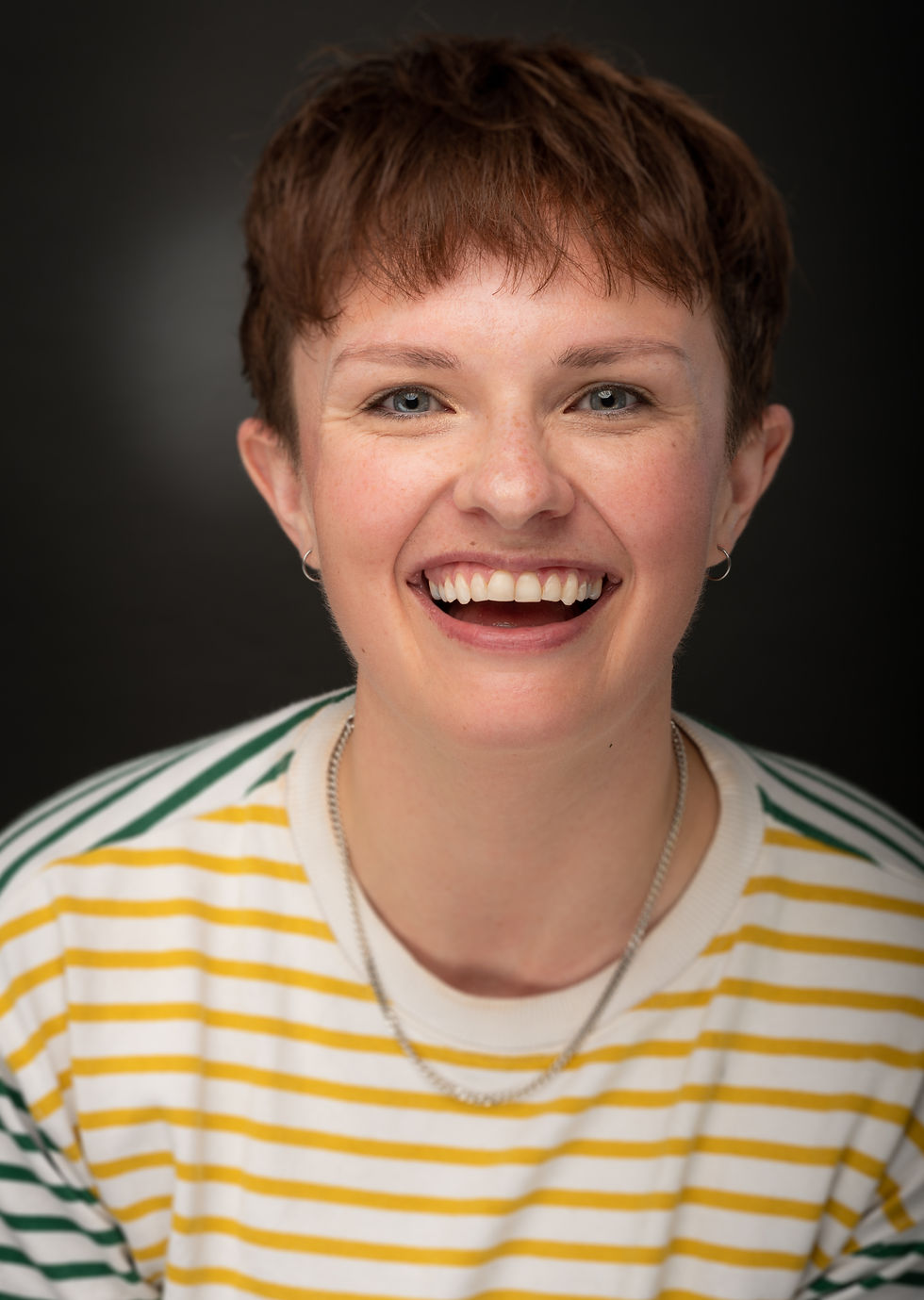
Okay - "jokes" might be a little kind - dad puns is more fitting. Thanks to all my different clients, I've managed to collect quite a few hundred zinger puns to use at will. Joking and being silly with your subject is a great way to get them to let their guard down, and get a few genuine smiles for their headshot selection process. However, if they want more genuine dramatic headshots - you can also utilise acting exercises (I tend to sway towards Stanislavski and Mel Churcher) to get some great emotional shots.
Quick side note - Make sure that you are staying far away from "dark humour" - often, having a "dark sense of humour" can be used as an excuse to say incredibly offensive things and get away with it. Your clients aren't going to find you appealing if you are (unknowingly or not) attacking their identity, interests, or community. Stay silly and stay kind. Also remember, joking might not ALWAYS be the correct thing to do, reading the room will help your delibiration of this.
Be transparent and vulnurable
To truly get the most out of your client, you need them to lay their cards on the table, and in conjunction, you need to too. Let your client see you're not a camera, but a photographer. Going through basic consent communication, as well as your methodology, goes a long way here. The client needs to know your process, and that they are in full control of the time they are spending there. Being vulnurable with your client means accepting that you are two people working as one, and understanding that you are not a god, and they are not a puppet. Talk with them, learn about interests, hobbies, careers, dreams - whatever you want. Just keep it positive, and don't get too personal.
Being transparent gives the client permission to do the same. This is how we get genuine, natural headshots every time. The social aspect of photography is neglected all too often, and can be the difference in good work, and great work.
Nic - FourthCornerPhotography.


Comments